Interview with Sara Abou Rashed, Guest Editor for The Dodge Special Issue, Return to Roots: Writing toward Land (January 2026)
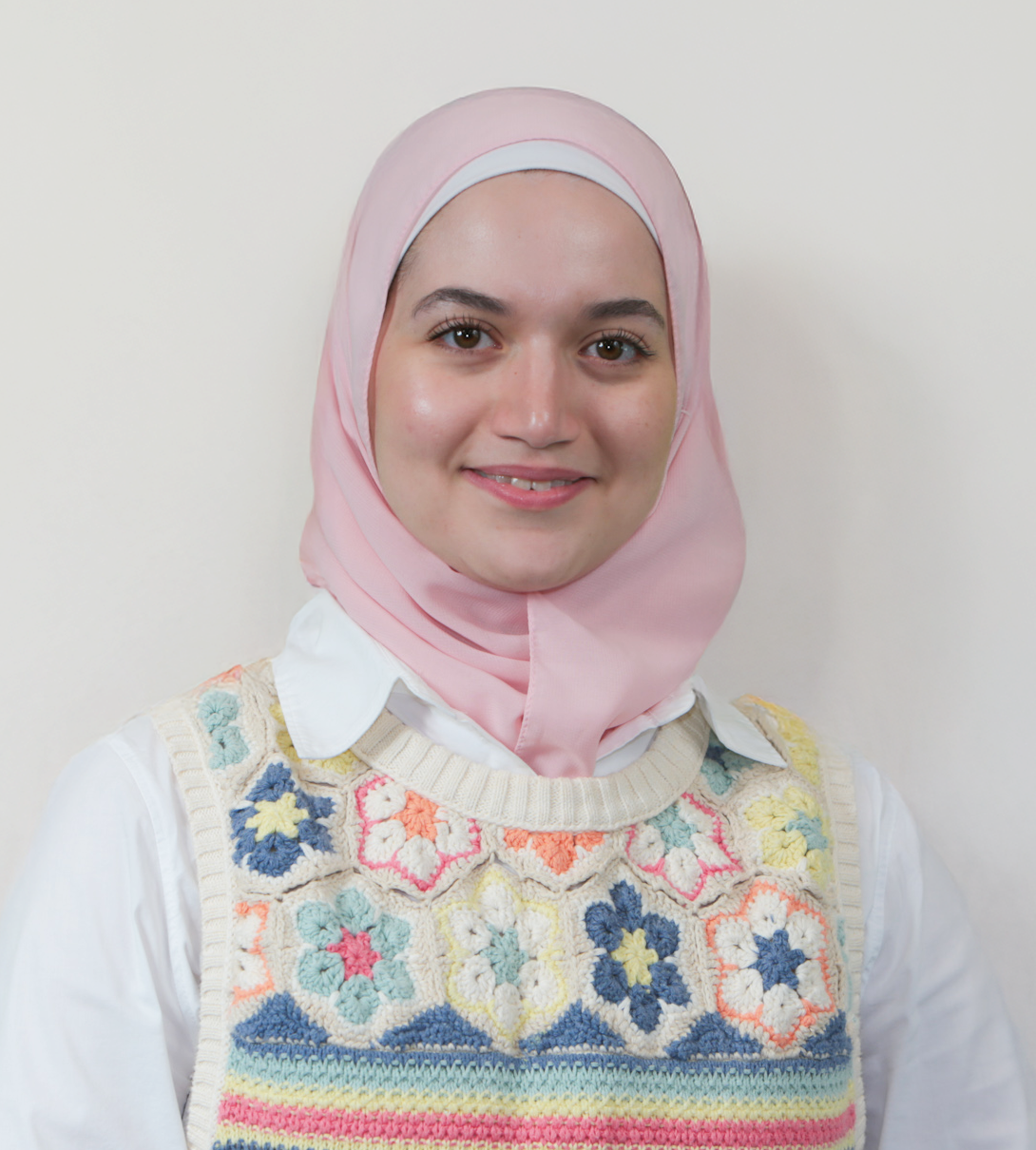
Interviewed by Editorial Assistant Emma Anderson
Sara Abou Rashed is a Palestinian poet, speaker, and creator of the one-woman show, A Map of Myself. Her writing interrogates exile, memory, war and belonging broadly defined. Sara’s writing appears in The Kenyon Review, The LA Review of Books, Poetry Magazine, Poetry Wales, as well as the anthologies A Land with a People, Call the Night for a Dream: Palestinian Writing from the Diaspora and 9-12 ELA curriculum from McGraw Hill, among others. A former poetry fellow at the Vermont Studio Center, Sara’s work has been commended by the UK Forward Prize and was awarded the 2023 Hopwood Award for Poetry from the University of Michigan, where she earned her MFA in Creative Writing. A Denison alum and a PhD student in English at the Ohio State University, Sara lives in Columbus, Ohio. Her first book, Theories of Return, is forthcoming from Diode Editions in 2026.
The Dodge Editorial Assistant Emma Anderson is Kazakh and lives in northeast Ohio, where she was raised. A senior English and Spanish double major at The College of Wooster, her senior undergraduate thesis considers how we imagine—and create—new futures through literature and storytelling. Her research and writing is primarily guided by women of color feminist and decolonial thought, Indigenous, and Chicanx literatures. Her project considers return to land, each other, and ourselves as an (im)possibility of futurity.
EA: This issue is not only special because of its theme and focus, but also because it’s a “teaching issue.” Can you talk about the educational emphasis of the issue—why you wanted it to be a teaching issue, and what this means to you?
SAR: Although Palestine has been under the occupation of the settler state of Israel for more than seventy-seven years, it was never this openly talked about before. Suddenly every conference, every magazine, organization, event, or university somehow alluded to Palestine explicitly (or implicitly, by refusing to comment on the genocide). As a Palestinian writer and guest editor, I didn’t want to simply collect writing relevant to the moment but to truly put together a useful resource empowering people to have more conversations, especially in the classroom. I can imagine how difficult it is to speak about what one may not have experienced firsthand, but that’s why literature is so powerful in how it allows us entry into other worlds. I also hope this issue gives educators permission to teach writing about social justice in terms of craft as well as content and to provide thoughtful questions and reflections that generate further writing.
EA: I’m really interested in the title of the special issue. What does “return to roots” mean to you? My research this year has made me wonder: how do you think we can demand justice in our writing while reckoning with certain impossibilities of return following the loss wrought by past and ongoing colonial projects? How do we avoid falling into traps of exceptionalism and romanticization of our pre-colonial pasts?
SAR: Return is a very central notion to occupied and displaced communities. For Palestinians as it is for Indigenous communities worldwide, return is the ultimate goal, dream, fantasy, promise, right, even reparation despite all difficulty or impossibility. I personally think and write about it extensively because I’m preoccupied with the tensions of wanting to return to a homeland I am not allowed to visit. My forthcoming poetry book, Theories of Return, is in fact entirely about the constructedness of homelands and the many ways we attempt to return.
I don’t think exceptionalism or romanticism are our biggest challenges—the homeland naturally becomes a nostalgic version of itself, and the exiled may develop identities different from those “at home.” It is also impossible to recover the homeland as it previously existed because colonialism will irrevocably be part of the story. Perhaps our biggest challenge is not making space for different kinds of belonging. I also think we should continue to explore what return might actually look like and the practicalities of liberation. What does it come down to? What would the borders (or lack of borders) of a liberated Palestine or Turtle Island look like?
EA: Thinking also of the title, what does it mean to “write toward land”? Are there any other important considerations you want to mention as it pertains to how you arrived at the title of this issue?
SAR: Expanding on return, writing toward land was a natural direction to lean into because it allowed the issue to name yet another tension when it comes to Palestine and global Indigenous struggles. Settler colonialism is violence on many levels, from the land, to the community, to the body, to the ecosystem… Many of the featured pieces name their geographies, others explore the feelings associated with them or document the violence endured over time and across different places. With return, roots, and land, the title was a way to foreground what’s contested for Palestinians and Indigenous communities as well as to reorient toward the natural elements and rebuild our connection with our occupied homelands as we simultaneously build solidarity with one another.
EA: The introduction you wrote on The Dodge site for the special issue is beautiful. I especially like how you describe land as not merely territory but as being interconnected with us and our histories. On a similar note to the question on return, I was struck by the phrase “reclamation of a mystical inheritance.” What does the phrase “mystical inheritance” mean to you? I think a lot in my research about both the material demands of decolonization and reparations—as well as the emotional, corporeal, psychic, sexual, spiritual, etc. aspects. Where do you see the role of writing and literature in this struggle for justice and decolonization?
SAR: Beautiful question—mystical inheritance is a way to name the intangible, what we might have inherited unconsciously or what we write toward without knowing. Diasporic writing suffers a particular condition of persistent alienation, being neither from here nor there (to use poet Mahmoud Darwish’s words), so in that sense, as much as we try to cling to the tangible (language, land, roots) we have to make room for what can’t be named. I’m very inspired by diasporic writers who expand our traditional ideas of homelands, belonging, reclamation, decolonization and justice. . .Writing is full of possibilities and our collective imaginations have the power to create new narratives and offer new solutions that politics alone can’t dream up. I remember feeling this way at Palestine Writes, a writing festival that happened in September of 2023 at the University of Pennsylvania. With over a thousand writers gathered, it truly felt like its own kind of return, and I remember we all left hopeful and ignited to write stories for a new era, more forward-looking, more liberatory than nostalgic.
EA: I understand that the issue was originally only going to focus on Palestine and then was later expanded to also think more broadly about the global Indigenous struggle. In considering this wider scope of global Indigeneity, how do we recognize shared struggles while preserving our differences and the particularities of our experiences and histories?
SAR: That’s true, yes! I’m very grateful to Marlo Starr who welcomed the expansion from solely on Palestine and even solely by Palestinian writers or writers from Ohio to a much wider scope, one that now includes works from Gaza to Hawai‘i and beyond! It was very important for me to truly create an inclusive and welcoming literary space that didn’t reiterate limitations or reproduced exclusions. Palestine is inseparable from other struggles, and different communities have shown us exceptional support that I hope we repay…The goal is never to make sweeping statements or blanket all causes under one but to intentionally carve coalitional spaces. It’s an interesting paradox, the more we learn about each other’s causes and become involved in other movements, the more capable we are of articulating and respecting differences while noticing similarities. Also, our very structures of oppression are similar if not the same—what does that say about us, those on the receiving end of them? We need to move beyond generalizations yet keep the door open for others continents away to nod in familiarity. I’m grateful for each of the writers who have shared their unique language and perspective, allowing us to put together this beautiful and heartbreaking mosaic of sorts. May we write our way toward a collective liberation and a return that shows us what we didn’t know was possible.